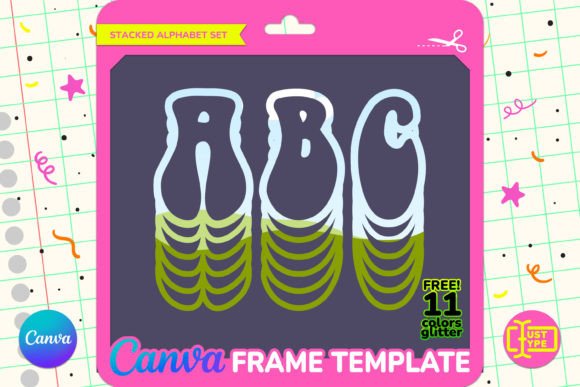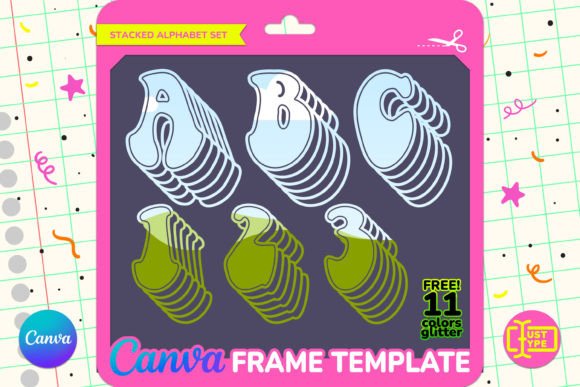
Reviving Retro Aesthetics: A Deep Dive into the Funky Seventies Stacked Canva Frame
The visual landscape of graphic design is cyclical, constantly borrowing from the past to inform the future. Few eras offer as rich a palette of inspiration as the 1970s, a decade defined by bold experimentation, warm earth tones, and unapologetic creativity. Within this retro revival, specific tools have emerged to help modern creators tap into that energy without needing advanced software skills. One such tool gaining traction among designers, educators, and hobbyists alike is the Funky Seventies Stacked Canva Frame. This template offers a unique bridge between vintage nostalgia and contemporary digital workflow, allowing users to create striking typography-based designs with minimal effort.
Understanding how to leverage this specific type of resource requires looking beyond just the aesthetic appeal. It involves recognizing the technical advantages of vector-based templates, the efficiency of drag-and-drop interfaces, and the broader application of retro-styled graphics in today’s market. Whether you are a small business owner looking to revitalize your brand identity or an educator seeking engaging classroom materials, exploring the capabilities of stacked text frames can significantly enhance your creative output.
The Mechanics of Stacked Text Design
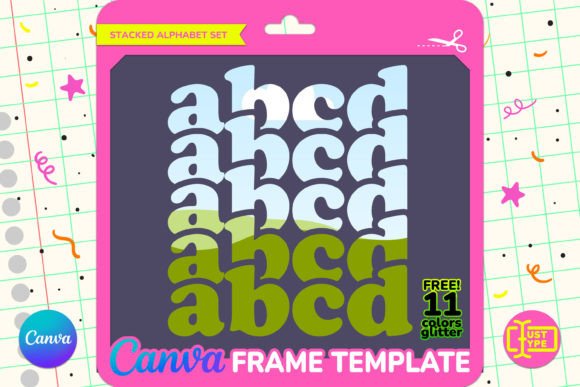
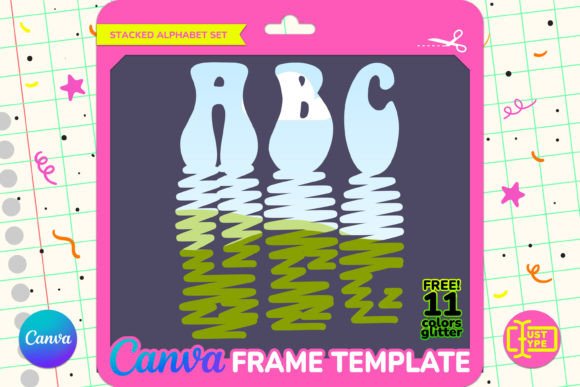
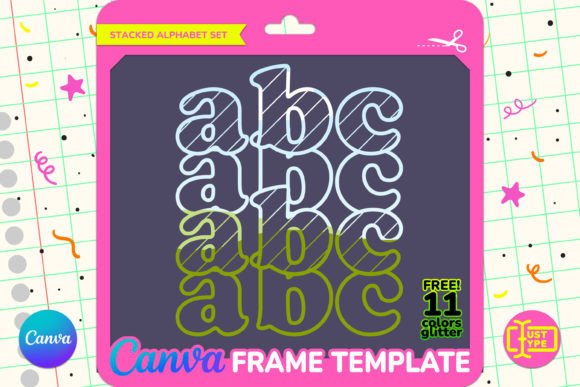
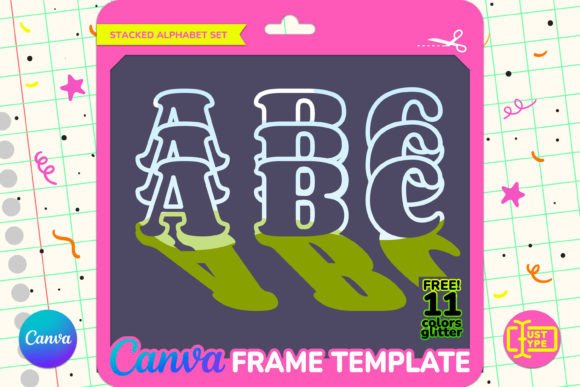
To appreciate the utility of the Funky Seventies Stacked Canva Frame, it is essential to first understand the concept of stacked lettering. Unlike traditional linear typography where words flow horizontally across a page, stacked text arranges letters vertically, often one atop another. This technique creates a solid block of visual weight, turning individual characters into structural elements of a composition. In the context of the seventies, this style was frequently used on album covers, concert posters, and magazine headers to grab attention amidst a cluttered media environment.
When translated into a digital frame format, these stacked letters become containers rather than just text. This is a crucial distinction for designers. Instead of manually positioning images behind text layers—a process that can be tedious and prone to alignment errors—the frame acts as a mask. Users simply drag and drop their chosen patterns, photographs, or textures into the designated areas. The image fills the shape of the letters automatically. This method ensures that the intricate curves and angles of the retro font are preserved perfectly, regardless of the content placed inside.
The advantage here is speed and consistency. For professionals managing multiple projects, having a pre-structured layout eliminates the guesswork involved in kerning and leading. It allows the creator to focus entirely on the color palette and imagery, which are the primary drivers of mood in seventy-inspired designs. The result is a cohesive look that feels intentional and polished, yet retains the playful, organic feel characteristic of the era.
Bridging Vintage Charm with Modern Workflow
One of the most significant barriers to entry in graphic design has historically been the learning curve associated with complex software like Adobe Illustrator or Photoshop. While powerful, these tools require time and training to master effectively. The introduction of web-based platforms like Canva has democratized design, but even within these user-friendly environments, creating custom vector shapes can be challenging for beginners. This is where the Funky Seventies Stacked Canva Frame shines by simplifying the technical aspects of design.
This template is built on a vector-based foundation, meaning that the shapes of the letters are defined by mathematical equations rather than pixels. Consequently, they can be resized infinitely without losing quality. A designer can scale a logo from the size of a business card to a billboard, and the edges will remain crisp and clean. This scalability is vital for multi-channel marketing strategies where assets must adapt to various formats, from social media avatars to large-format print banners.
Furthermore, the organization of the project files plays a pivotal role in usability. High-quality templates ensure that all letters are well-organized within the layer structure. This means that when a user opens the file, they can easily pick out individual components if they wish to edit them separately. For instance, one might want to change the fill pattern of only the letter 'S' while leaving the rest uniform. An organized file structure makes this possible, whereas a flattened or poorly layered file would require starting over. This level of control empowers users to tweak details to fit their specific branding guidelines without compromising the overall integrity of the design.
Enhancing Visual Impact with Texture and Depth
Retro aesthetics are not solely about shape; they are also deeply rooted in texture. The seventies were known for grainy photography, halftone patterns, and rich, tactile surfaces. To capture this essence authentically, flat colors often fall short. This is why many premium templates, including those paired with bonus packs, include supplementary assets like glitter textures or distressed overlays. These elements add an extra layer of charm and complexity to the final composition.
Consider a scenario where a boutique coffee shop wants to launch a new line of seasonal blends with a retro theme. By using the stacked frame template, they can fill the letters with high-resolution images of coffee beans or steam. Then, by applying a subtle glitter or grain texture overlay, the design gains a sense of depth and warmth that resonates with the sensory experience of drinking coffee. These textures harmonize seamlessly with the bold lines of the stacked text, preventing the design from looking too sterile or digital.
The inclusion of high-quality JPG files for these textures ensures that they can be applied consistently across different projects. Because they are separate from the main vector file, they do not bloat the document size unnecessarily, keeping the editing process smooth and responsive. This modular approach allows creators to mix and match textures based on the desired mood—opting for smooth gradients for a sleeker look or rough, noisy textures for a more authentic vintage feel.
Practical Applications Across Industries
The versatility of the Funky Seventies Stacked Canva Frame extends far beyond simple decorative purposes. Its ability to command attention makes it suitable for a wide array of professional and personal applications. Here are several ways this tool can be integrated into daily workflows:
- Event Marketing: Concerts, festivals, and themed parties benefit greatly from bold, energetic typography. The stacked letters provide a strong anchor for event details, ensuring that the date, location, and headliner are immediately visible.
- Educational Materials: Teachers and professors can use these templates to create engaging slide decks, worksheets, or certificates. The fun, retro style helps break the monotony of standard educational content, making learning more visually stimulating for students.
- Social Media Content: In the fast-paced world of Instagram and TikTok, static images need to stop the scroll. Large, colorful stacked text serves as an effective hook, drawing users into the caption or link provided below the image.
- Product Packaging: Small businesses selling physical goods, such as candles, soaps, or apparel, can use these designs for labels and tags. The scalable nature of the vector file ensures that the branding looks professional whether printed on a tiny sticker or a large tote bag.
- Personal Projects: Hobbyists working on scrapbooks, greeting cards, or home decor signs find value in the ease of use. The drag-and-drop functionality allows anyone, regardless of design background, to produce results that look professionally made.
Important Considerations for Implementation
While the benefits are clear, there are practical considerations to keep in mind when utilizing Canva-based templates. First and foremost, it is important to distinguish between a frame template and a traditional font file. A Funky Seventies Stacked Canva Frame is not a downloadable font that can be installed on your computer for use in Microsoft Word or other standalone applications. It is a specific asset designed to work within the Canva ecosystem. Therefore, access to a Canva account is mandatory.
Additionally, users should be aware of the differences between free and paid tiers of the platform. While basic editing and downloading are available to all users, certain features, such as downloading images with transparent backgrounds, may require a Canva Pro subscription. Transparent backgrounds are particularly useful when placing your design over existing photos or colored backgrounds without a distracting white box around it. If transparency is not required for your specific project, the free version may suffice.
Another consideration is the source of the images and textures used within the frames. To avoid copyright issues, it is best practice to use royalty-free stock photos or original photography. Many template sellers provide links to compatible resources or suggest safe alternatives, but ultimately, the responsibility lies with the user to ensure that all visual elements are cleared for commercial or personal use as needed.
Conclusion
The resurgence of seventies aesthetics offers a powerful opportunity for creators to connect with audiences through nostalgia and vibrancy. Tools like the Funky Seventies Stacked Canva Frame make this aesthetic accessible, efficient, and adaptable. By combining the structural strength of stacked lettering with the flexibility of modern drag-and-drop technology, these templates empower users to elevate their designs effortlessly. Whether you are crafting a promotional poster, designing educational content, or enhancing social media presence, understanding and utilizing these resources can lead to more impactful and visually compelling results. As the demand for distinctive, retro-inspired visuals continues to grow, mastering these tools will remain a valuable skill for any creative professional.