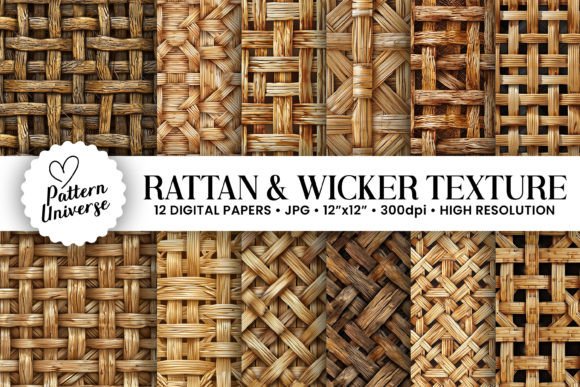
Rattan Wicker Texture Backgrounds
In the landscape of digital design and physical craft production, texture serves as a foundational element that dictates the tactile feel and visual depth of a final product. Rattan Wicker Texture Backgrounds represent a specific aesthetic choice that bridges the gap between organic naturalism and structured geometric precision. For professionals ranging from graphic designers to small business owners, integrating these textures into workflows is not merely an artistic decision but a strategic one involving brand consistency, material simulation, and user engagement.
The core offering described here—a collection of 12 high-resolution, seamless patterns generated via artificial intelligence—provides a scalable solution for various creative needs. These assets are designed to be versatile, supporting applications from digital print-on-demand services to physical scrapbooking. Understanding how to effectively utilize these backgrounds requires looking beyond their visual appeal and examining their technical specifications, integration capabilities, and long-term utility in a production pipeline.
Technical Specifications and Workflow Integration
The effectiveness of any digital asset in a professional workflow is determined by its resolution and file structure. The provided set includes files at 300dpi with dimensions of 3600 x 3600 pixels, which equates to a physical size of 12 inches by 12 inches at full quality. This specification is critical for several reasons.
- Print Readiness: A resolution of 300dpi is the industry standard for high-quality printing. Whether you are creating greeting cards, invitations, or tumbler wraps, this resolution ensures that the intricate details of the rattan weave remain crisp without pixelation or blurring when scaled for commercial printers.
- Scalability within Limits: While 12x12 inches is a standard scrapbook size, the high pixel count allows for significant cropping. Designers can extract smaller, detailed sections of the pattern for use as focal points or borders, while retaining the original large files for background usage.
- Seamless Tiling: The "seamless" nature of these patterns is essential for digital backgrounds and wrapping applications. It allows the texture to repeat infinitely without visible breaks, which is crucial for designing continuous surfaces like website headers, social media banners, or fabric prints.
When integrating these assets into software such as Adobe Photoshop, Illustrator, or Affinity Designer, users should leverage the vector-based editing capabilities where possible. Although the output is raster-based (pixel data), importing them as smart objects preserves their quality during scaling and transformation operations. This practice maintains efficiency in the design process, allowing for rapid iteration without degrading image fidelity.
Application Scenarios Across Industries
The versatility of Rattan Wicker Texture Backgrounds allows them to fit into diverse project lifecycles. Below are practical examples of how these assets can be deployed across different professional domains.
Direct-to-Consumer (DTC) Product Design
For entrepreneurs selling physical goods, particularly those utilizing print-on-demand (POD) platforms, texture plays a massive role in perceived value. A plain white mug has low perceived value; a mug wrapped in a realistic rattan texture suggests craftsmanship and warmth. By applying these seamless patterns to mockups, sellers can create compelling product listings that resonate with consumers seeking bohemian, coastal, or rustic aesthetics.
The process involves taking the 3600x3600px file, mapping it onto a cylindrical mesh in your 3D rendering software or using layer styles in 2D design tools to simulate the curvature of a tumbler or box. The high resolution ensures that the shadowing and highlights inherent in the AI-generated texture look authentic under various lighting conditions simulated in the mockup.
Event Planning and Stationery Design
Educators, freelancers, and event planners often require custom stationery suites. Invitations, save-the-dates, and thank-you cards benefit from the organic feel of wicker textures, which convey elegance and approachability simultaneously. Because the patterns are seamless, they can be used to create full-page backgrounds that frame text elements without distracting from the content.
In this workflow, the designer typically places the texture layer at the bottom, adjusts the opacity or applies a blending mode (such as Multiply or Overlay) to allow underlying colors to interact with the weave, and then adds typography on top. The 12 distinct variations included in the zip file provide enough variety to maintain visual interest across a multi-piece suite, ensuring that each component of the invitation set feels cohesive yet unique.
Digital Content Creation and Blogging
Blogger and publisher audiences increasingly demand visually rich content. Using these textures as headers, dividers, or featured images can break up text-heavy layouts and improve user retention. Unlike stock photography, which can sometimes feel generic, AI-generated textures offer a level of customization and uniqueness that helps establish a distinct brand identity.
Furthermore, these backgrounds can be repurposed for email marketing campaigns. A newsletter footer featuring a subtle rattan pattern can reinforce brand aesthetics without overwhelming the call-to-action buttons. The key here is moderation; the texture should support the message, not compete with it.
Implementation Best Practices
To maximize the utility of the 12 Digital Papers included in the package, creators should adhere to a structured approach to asset management and design execution.
Organization and Accessibility
Upon downloading the single ZIP file, immediate organization is recommended. Create a dedicated folder structure within your project directories, such as /Assets/Textures/Rattan_Wicker. Label each of the 12 files descriptively based on their visual characteristics (e.g., light_weave, dark_braid, horizontal_grain). This step reduces friction during the creative process, allowing designers to locate the appropriate texture quickly without sifting through unorganized downloads.
Color Adaptation
While the AI-generated textures provide a base color palette, real-world applications often require color matching to existing brand guidelines. Use adjustment layers in your design software to shift hues, saturations, and brightness levels. For instance, a pastel-themed baby shower invitation might benefit from desaturating the brown tones of the rattan and adding a slight pink tint, while a masculine gift wrap might require deepening the contrast to emphasize the shadows of the weave.
Combining with Other Elements
The strength of these backgrounds lies in their ability to complement other design elements. They pair exceptionally well with:
- Natural Typography: Serif fonts with organic curves enhance the rustic theme.
- Botanical Illustrations: Leaves, flowers, and fruits reinforce the natural origin of the rattan.
- Minimalist Layouts: Ample white space around the textured areas prevents visual clutter and directs focus to the central message.
Avoid over-layering. If the rattan texture is dominant, keep adjacent graphics simple. Conversely, if the graphic elements are complex, reduce the opacity of the background texture to ensure readability.
Quality Control and Long-Term Value
Investing in high-quality digital assets pays dividends in reduced revision cycles and higher client satisfaction. The 300dpi resolution ensures that these files are future-proof. As printing technologies advance and screen resolutions increase, having source files that exceed current standards allows designs to remain relevant for years. Additionally, the seamless nature of the patterns means they can be used in both static and dynamic contexts, such as animated web backgrounds or looping video intros, expanding their utility beyond static print.
For hobbyists and educators, these resources lower the barrier to entry for professional-looking projects. Teachers can create engaging worksheets or classroom decorations with minimal effort, while parents can produce personalized gifts for children’s events. The ease of access—being contained in a single, easily manageable zip file—facilitates quick adoption into personal or educational routines.
Conclusion
Rattan Wicker Texture Backgrounds are more than just decorative images; they are functional tools that enhance the aesthetic and emotional resonance of a wide array of projects. By understanding their technical specifications and integrating them thoughtfully into your design workflow, you can elevate everything from e-commerce product listings to handmade crafts. The combination of high resolution, seamless tiling, and diverse variations makes this collection a valuable asset for anyone looking to add a touch of organic elegance to their work.